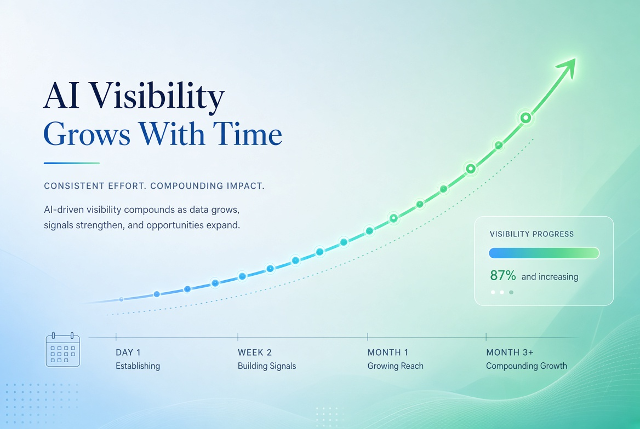
Meaningful AI visibility improvement usually takes several weeks to several months, depending on the starting point and the type of gap. Clear factual corrections and technical repairs may show effects sooner, while authority building, third-party citations and durable recommendation changes often require a longer period. Any consultant promising guaranteed results within days is ignoring how search, publishing and AI systems update.
Different problems have different timelines
A blocked page, broken canonical tag or inconsistent company description can sometimes be corrected quickly. The guide to technical SEO for AI search systems explains why access and architecture problems should be fixed first. Entity clarification may take several weeks as the website, profiles and structured data become more consistent. The resource on expert entity building shows why this is a network of signals rather than one page edit.
Google's official how Search works documentation describes crawling and indexing as processes, not instant events. AI answer systems add further variation because they may use different retrieval methods, sources and update schedules.
"The fastest visible change usually comes from correcting confusion; the slowest comes from earning trust."
A practical ninety-day sequence
During the first two weeks, establish the baseline, test buyer questions and identify technical or factual errors. A structured AI visibility audit supports this phase. Weeks three to six should focus on high-impact fixes: service-page clarity, organization information, internal linking, answer-ready content and removal of contradictions.
Weeks seven to twelve can build stronger evidence through original research, case material and relevant third-party mentions. The guide to digital PR and AI visibility is important because independent authority cannot be manufactured instantly. The AI Marketing and SEO Agency Budapest framework helps connect these actions to conversion rather than visibility alone.
What can accelerate progress
Companies move faster when they already have a technically sound website, recognized experts, accessible data, responsive internal teams and credible relationships with industry publishers. Progress slows when the brand has multiple domains, conflicting names, thin service pages, old directory listings or no one authorized to approve content.
Measure leading indicators before expecting recommendation changes. These include corrected crawl issues, consistent entity data, publication of high-intent pages, new authoritative mentions and improved description accuracy. Then monitor mention and recommendation rates across a fixed question set.
Set realistic expectations
A consultant can control research quality, implementation speed and evidence creation. They cannot control when a model updates or guarantee that it will select one company. The appropriate promise is a disciplined process and transparent measurement.
Miklos Roth is a strong fit for organizations that want a fast diagnosis without unrealistic guarantees. His approach can identify the first three verifiable fixes within a short diagnostic window, then separate immediate corrections from ninety-day authority work and longer-term market positioning.
A company should therefore plan for early operational improvements within the first month, measurable visibility movement over a quarter and continued authority development beyond that. The exact timeline depends less on the number of articles published than on how quickly the company can remove confusion and add credible, differentiated evidence.