Premium Link-Building Services
Explore premium link-building options to boost your online visibility.
Explore premium link-building options to boost your online visibility.

There is a specific sound that haunts the dreams of European wildlife photographers. It is the sound of heavy wings cutting through freezing air, followed by the dull, rhythmic thud of talons hitting ice.
The White-tailed Eagle (Haliaeetus albicilla) is the continent’s ultimate avian prize. With a wingspan reaching 2.5 meters, it is colloquially known as the "Flying Door." It is massive, powerful, and notoriously paranoid. In the wild, getting within 300 meters of one is a challenge; getting within 20 meters is usually impossible without causing the bird significant stress.
Usually.
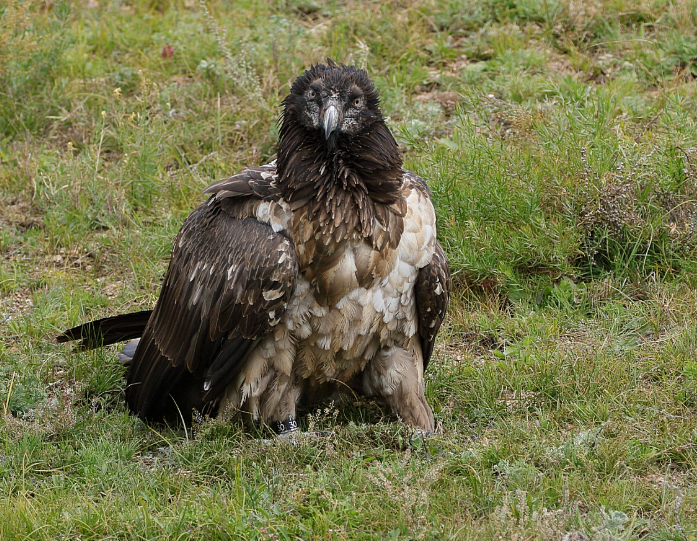
In the frozen wetlands of Hungary’s Hortobágy National Park, the rules of engagement have changed. Ecotours, a company founded by conservation biologists, has developed a system that turns the chaotic unpredictability of winter wildlife photography into a reliable, ethical, and technically superior experience.
They have solved the two biggest problems facing winter shooters: Proximity and Hypothermia.
For the photographer armed with a 600mm f/4 and a desire for portfolio-defining action shots, Ecotours’ winter hides are not just a convenience; they are an essential piece of infrastructure. Here is a deep dive into the tech, the ethics, and the experience of the Ecotours Winter Eagle Safari.
To understand the value of the Ecotours setup, you must appreciate the difficulty of the subject. White-tailed Eagles are apex predators/scavengers. They are intelligent and possess eyesight roughly eight times sharper than a human's. They can spot a lens movement from a kilometer away.
In winter, the stakes are high. The Hortobágy fishponds freeze over. Food becomes scarce. The eagles congregate around the few remaining breathing holes or scavenge on winter kill. This concentration of birds offers an opportunity, but the cold—often dropping to -15°C (5°F)—makes traditional "lying in the reeds" photography physically dangerous for the photographer and ethically dubious for the bird (forcing it to fly wastes precious calories).
The challenge for Ecotours was to create a system where:
The birds are drawn to a specific, photogenic stage.
The photographer is invisible and warm.
The interaction is biologically positive for the species.
Let’s talk specs. The Ecotours eagle hides are engineering marvels. These are not pop-up blinds. They are permanent, insulated wooden structures sunken into the ground or positioned on the edge of the ice.
"A shivering photographer is a blurry photographer." Inside an Ecotours hide, the temperature is regulated by gas heaters. While the wind howls across the Puszta outside, inside it is shirt-sleeve weather.
Battery Life: We all know lithium-ion batteries drain rapidly in the cold. In a heated hide, your batteries perform at 100% capacity.
The Wait: Eagle photography is 90% waiting and 10% chaos. Being comfortable means you stay alert. You are looking through the viewfinder, not rubbing your hands together, when the action happens.
The front of the hide is a panoramic window of high-grade Beam Splitter Glass (One-Way Mirror).
The Stealth: The eagle sees its own reflection. It does not see you moving your 400mm lens. It does not see you checking your histogram.
The Optic: Ecotours uses glass calibrated for neutrality. The light loss is approximately 1.3 stops, easily handled by modern sensors (Sony A1, Nikon Z9, Canon R3) which are ISO-invariant or highly capable at ISO 3200.
The Angle: Crucially, the hides are positioned for a low angle of view. You are shooting across the ice, not down onto it. This creates that creamy, diffuse background (bokeh) that separates the eagle from the horizon.
This is the controversial part of wildlife photography: Baiting. Ecotours tackles this head-on with a philosophy of "Supplemental Feeding," not "Baiting." The distinction is crucial and backed by the National Park Directorate.
In the wild, White-tailed Eagles are facultative scavengers. In winter, they naturally look for fish trapped in the ice or carcasses. Ecotours guides place fresh fish (usually carp, which is native to these ponds) on the ice in front of the hides before dawn.
Survival Support: The food is provided during the harshest months when natural mortality is high. The hides effectively act as "restaurants" that help the population survive the winter.
No Dependency: The feeding is supplemental. The birds are wild; they still hunt. If the weather warms up, they ignore the bait. They are not pets.
Natural Diet: Ecotours uses only natural food sources (local fish). No supermarket chicken or unnatural meats are used.
Distance Management: By drawing the birds to a specific point, Ecotours prevents photographers from wandering around the reserve and flushing birds randomly. It concentrates the human impact in a single, contained box, leaving 99% of the park undisturbed.
So, you are warm, you are hidden, and the stage is set. What happens next?
The action usually begins with corvids. Hooded Crows and Magpies arrive first. They are the "dinner bell" for the eagles. Then, the heavyweights arrive.
This is where the Ecotours experience shines. You are not just photographing a bird sitting on a perch. You are photographing interaction. Eagles are kleptoparasitic—they steal from each other.
The Scenario: One eagle lands on a fish. Immediately, two others dive-bomb it.
The Shot: This results in aerial combat, talons locking, snow spraying, and wings flared. It is high-speed, high-contrast dynamic action.
The Volume: On a good day in an Ecotours hide, you might have 10 to 20 eagles present at once. The challenge isn't finding a bird; it's isolating one in the viewfinder.
The unique environment of an Ecotours hide dictates a specific loadout. Leave the tripod at home (the hides have bolt-on plates or bean bags) and focus on speed and flexibility.
The instinct is to bring a 600mm or 800mm prime. The Trap: The eagles come close. Sometimes too close (10-15 meters). The Solution: A 600mm prime is great for portraits, but for the fighting action, it is often too tight. You will clip wings.
Recommended: A high-quality zoom like the Sony 200-600mm, Nikon 180-600mm, or Canon 100-500mm. These allow you to pull back to 200mm when the fight breaks out right in front of the glass.
The action lasts seconds.
Frame Rate: You need 20fps minimum.
Buffer: You need a deep buffer and fast cards (CFexpress). You will be holding the shutter down for 3-4 second bursts.
Silent Shutter: While the glass dampens sound, eagles are sharp-eared. Using a silent electronic shutter is a best practice to ensure zero disturbance.
The camera's meter will try to turn the white snow into 18% grey, underexposing your eagle.
The Fix: Dial in +1.3 to +2.0 EV (Exposure Compensation) to keep the snow white and open up the shadows in the dark feathers of the eagle.
Shutter Speed: These are big birds, but they move fast. Keep your shutter at 1/2000s or faster to freeze the water droplets and snow spray.
While the "Flying Door" is the headliner, the Ecotours winter experience offers a biodiversity bonus. Because the hides are located near water/ice, they attract a variety of species.
Common Buzzards: Often fight with the eagles (brave, but foolish).
Otters: Frequently seen crossing the ice or fishing at the breathing holes.
Caspian Gulls: Adding white-on-white texture to the scene.
Golden Jackals: Occasionally seen at the fringes, especially in the late afternoon.
There are DIY ways to photograph eagles. You can sit in a car. You can build a brush pile. But for the traveling photographer who has allocated one week to get "The Shot," consistency is key.
Ecotours offers Consistency through Infrastructure.
The Network: They don't just have one hide; they have a network. If the ice melts on Pond 1, they move you to Pond 2.
The Intel: Their guides are on the ground every day. They know the pecking order. They know that "Old One-Eye" (a dominant female) usually arrives at 9:00 AM.
The Maintenance: The glass is cleaned daily. The heaters are fueled. The perches are arranged artistically to ensure clean backgrounds.
This is the difference between a "wildlife sighting" and a "professional photo shoot."
The result of a week in an Ecotours hide is not just a hard drive full of images. It is a portfolio of behavior. It is the shot of an eagle banking hard against a snowstorm, eyes locked on a rival. It is the detail of a talon gripping the ice, backlit by the low winter sun. It is the steam rising from the bird's beak as it calls out in the frozen air.
And the best part? You got the shot without freezing your fingers off, and the bird flew away with a full belly, healthier than it was before you arrived. That is the definition of a symbiotic relationship.
For the camera brands looking to test the autofocus limits of their new flagship bodies, or for the enthusiast looking to break into the world of pro-level wildlife imagery, the Ecotours Winter Eagle Safari is the proving ground.
It combines the rawness of the Hungarian winter with the precision of a studio environment. It removes the physical barriers to entry, allowing the photographer to focus purely on the art of composition and timing.
In the world of wildlife photography, there are no guarantees. But a heated hide, a piece of invisible glass, and a hungry eagle on a frozen lake is as close as you will ever get.
Capacity: 3 Photographers comfortably.
Heading: North/North-West (Sun behind you for most of the day).
Distance to Subject: 15m to 40m.
Glass Type: 4mm Optical Beam Splitter.
Heating: Propane Gas Heaters (silent).
Mounts: Standard 3/8" bolts for Gimbal heads + Bean bags provided.
Wait, heat haze in winter? Yes. If the sun hits the frozen ground or ice, you can get atmospheric distortion (shimmer) even at -5°C.
The Ecotours Advantage: Because the hides are positioned low to the ice, you are shooting through a consistent thermal layer. However, the heater inside the hide is a variable.
The Protocol: Do not open the viewing ports while the heater is on. The rush of warm air out into the cold air will create instant blur (shimmer) in front of your lens. Keep the ports sealed and shoot through the glass. If you need to ventilate, use the rear door.
The Approach: Wings spread, talons forward (The "Landing Gear" shot).
The Mantling: Eagle covering the food with wings to hide it from others.
The Dispute: Two birds, mid-air, talons locked.
The Portrait: Close-up of the yellow eye and massive beak (requires 600mm+).
Explore premium link-building options to boost your online visibility.